
An outliner where every bullet can be a typed object — enormously powerful, genuinely hard.
Pricing
Verified 14 Jul 2026· sourceOverview
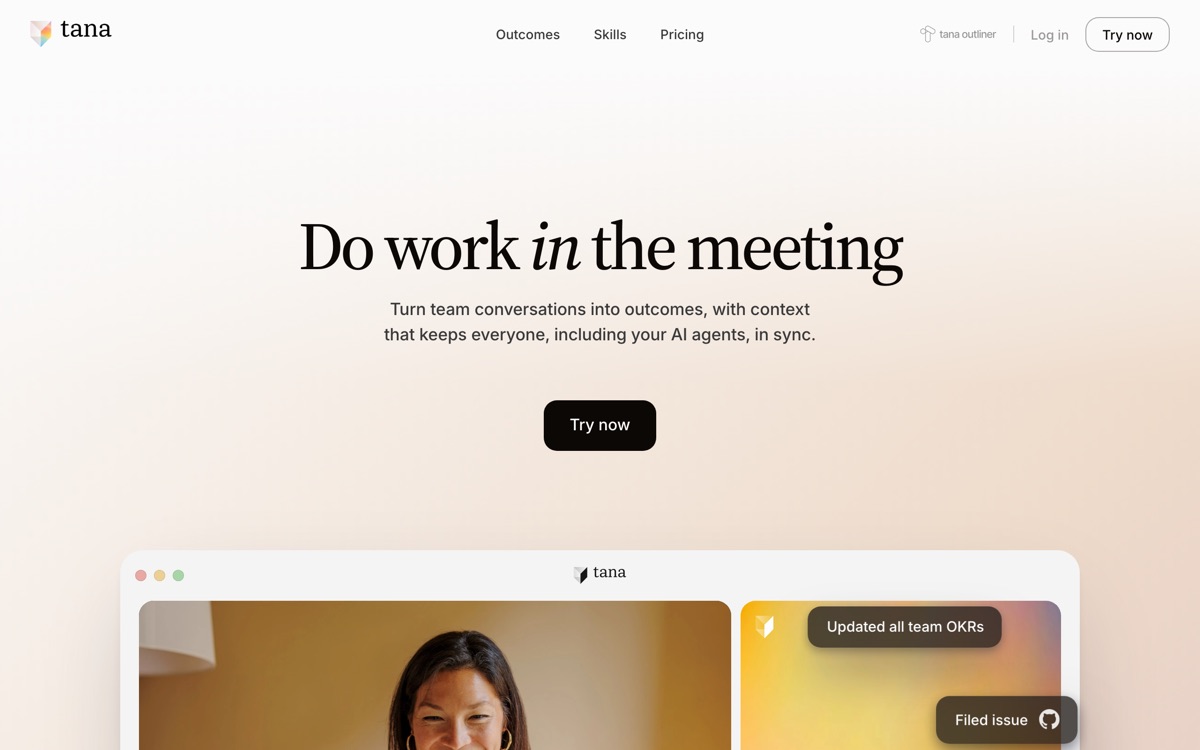
Tana is the most conceptually ambitious tool in this category. It looks like an outliner, but any node can be given a supertag that turns it into a structured object with fields — a person, a project, a meeting — and those objects can then be queried and assembled into live views. In effect you are building a personal database while writing bullets, without ever opening a database UI. It also does voice capture and AI-assisted meeting notes that slot into that structure. Used well, it collapses the wall between notes and data in a way nothing else quite manages. It is also the steepest learning curve here by some distance. Supertags, fields and live searches are a mental model you must actually learn, and most people who try Tana bounce off it. It is slower than a plain outliner, effectively requires an internet connection, and there is no true offline or local-first story. Recommended only if the structure is the point and you will invest the time.
Features
Pros & cons
Pros
- The supertag model genuinely unifies notes and structured data
- Live queries mean dashboards build themselves as you write
- Voice capture is unusually well thought through for a notes tool
Cons
- Very steep learning curve — most trial users never get past it
- Cloud-dependent with no real offline or local-first mode
- Performance drags on large, heavily structured workspaces
- You must design your own schema; the tool gives you power, not a system
Who Tana is for
Tana is built for people working with note-taking tools. Its free plan makes it easy to evaluate before paying, which suits both individuals and growing teams. Users most often highlight the supertag model genuinely unifies notes and structured data.
How Tana compares in AI Note-Taking Tools
Within note-taking tools, the closest alternatives to Tana are Anytype, Obsidian, Notion — it is worth comparing them side by side on price and the specific features you need before deciding.
Tana pricing
Tana offers a free plan with paid upgrades. You can start for free and pay only when you need higher limits, advanced features or team seats. See the full Tana pricing breakdown →
Tana FAQ
Is Tana worth it?
Tana is most often praised for the supertag model genuinely unifies notes and structured data. The main trade-off is that very steep learning curve — most trial users never get past it. For most note-taking tools needs it is a credible choice — trial it against one or two alternatives before you commit. ToolsPantry does not yet carry user reviews for this tool.
Is Tana free?
Tana offers a free plan with paid upgrades. You can start for free and pay only when you need higher limits, advanced features or team seats.
What are the downsides of Tana?
The most commonly noted drawbacks are: Very steep learning curve — most trial users never get past it; Cloud-dependent with no real offline or local-first mode; Performance drags on large, heavily structured workspaces; You must design your own schema; the tool gives you power, not a system. None are dealbreakers for everyone, but weigh them against your specific workflow.
What are the best alternatives to Tana?
Strong alternatives in note-taking tools include Anytype, Obsidian, Notion, Capacities. See the full ranked list on the Tana alternatives page.
The verdict
Tana is a note-taking tools option, best known for the supertag model genuinely unifies notes and structured data. The main trade-off is that very steep learning curve — most trial users never get past it. Start on the free plan and compare it against the alternatives below before committing.
Embed a badge
Show visitors Tana is on ToolsPantry. Paste this into your site — it links back here. About badges →
<a href="https://toolspantry.com/tools/tana" target="_blank" rel="noopener">
  <img src="https://toolspantry.com/tools/tana/badge" alt="Tana on ToolsPantry" width="252" height="60" />
</a>Alternatives to Tana

A fast, encrypted, opinionated notes app for daily writing and networked thought.

Local-first, end-to-end encrypted, and closer to a private Notion than a notes app.
Google's research assistant that only answers from the sources you give it — with citations.