
A free, nonprofit academic search engine with an open API — the quiet infrastructure behind half this category.
Overview
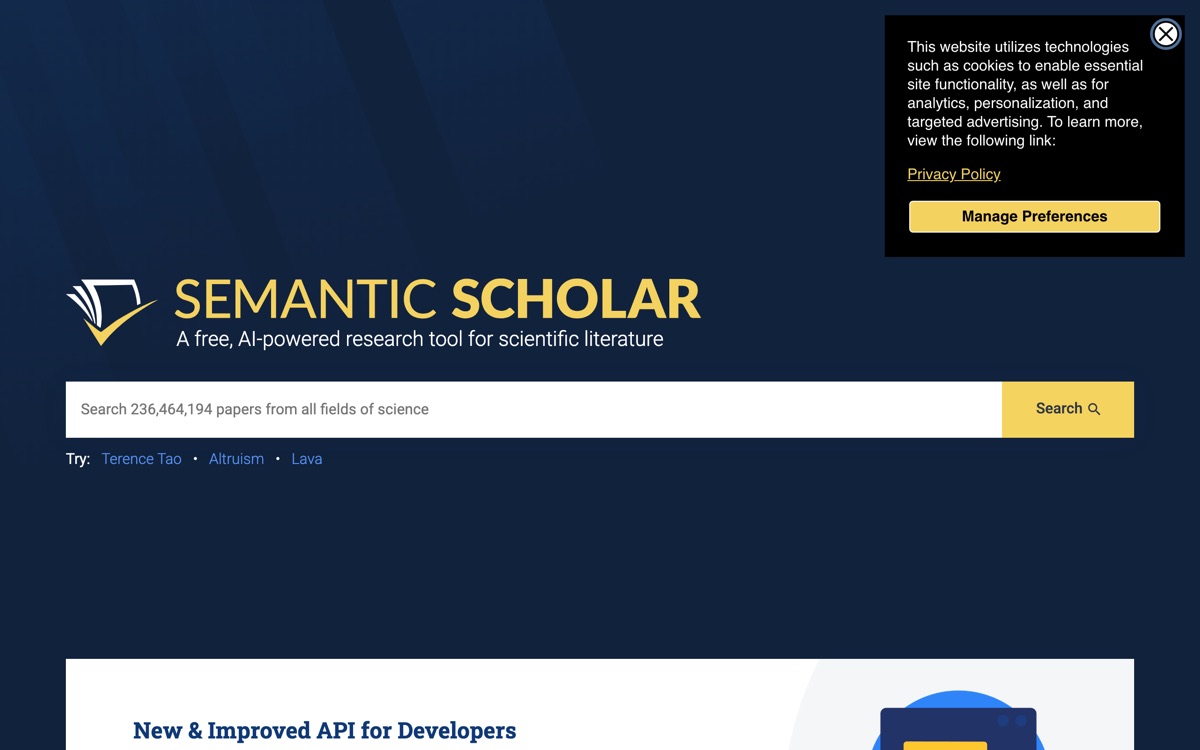
Semantic Scholar is run by the Allen Institute for AI as a public good, and it is free in the way that actually matters: no tiers, no credits, no upsell. It indexes hundreds of millions of papers across disciplines, adds machine-generated TLDR one-line summaries, extracts figures and citation contexts, builds author profiles, and lets you save papers into a library with feed recommendations based on what you've read. Its open API and public datasets are why so many other research tools — including several commercial ones you pay for — are ultimately drinking from this well. For most researchers it is the sensible default starting point before anything paid. It is, however, a search engine rather than a workflow. There is no visual citation mapping like Connected Papers or ResearchRabbit, no yes/no synthesis like Consensus, no citation-stance classification like Scite. Metadata quality varies, author disambiguation is imperfect and duplicate profiles are common, and coverage is stronger in computer science and biomedicine than in the humanities. Open-access full text is inconsistent, so you will still hit paywalls. Excellent free foundation; pair it with something else.
Features
Pros & cons
Pros
- Genuinely free, nonprofit, with no upsell or usage credits
- TLDR summaries make scanning a results page fast
- Open API and datasets — the backbone many paid tools are built on
- Broad, cross-disciplinary coverage
Cons
- No visual citation mapping or synthesis features — it's a search engine, not a workflow
- Author disambiguation is imperfect; duplicate and merged profiles are common
- Coverage and metadata quality are uneven outside CS and biomedicine
- Full-text access is inconsistent — expect to hit publisher paywalls
Who Semantic Scholar is for
Semantic Scholar is built for people working with research tools. Being free, it is an easy first choice when you want to get going without a budget. Users most often highlight genuinely free, nonprofit, with no upsell or usage credits.
How Semantic Scholar compares in AI Research Tools
Within research tools, the closest alternatives to Semantic Scholar are Connected Papers, ResearchRabbit, Consensus — it is worth comparing them side by side on price and the specific features you need before deciding.
Semantic Scholar pricing
Semantic Scholar is free to use — there is no paid tier required for its core features. See the full Semantic Scholar pricing breakdown →
Semantic Scholar FAQ
Is Semantic Scholar worth it?
Semantic Scholar is most often praised for genuinely free, nonprofit, with no upsell or usage credits. The main trade-off is that no visual citation mapping or synthesis features — it's a search engine, not a workflow. For most research tools needs it is a credible choice — trial it against one or two alternatives before you commit. ToolsPantry does not yet carry user reviews for this tool.
Is Semantic Scholar free?
Semantic Scholar is free to use — there is no paid tier required for its core features.
What are the downsides of Semantic Scholar?
The most commonly noted drawbacks are: No visual citation mapping or synthesis features — it's a search engine, not a workflow; Author disambiguation is imperfect; duplicate and merged profiles are common; Coverage and metadata quality are uneven outside CS and biomedicine; Full-text access is inconsistent — expect to hit publisher paywalls. None are dealbreakers for everyone, but weigh them against your specific workflow.
What are the best alternatives to Semantic Scholar?
Strong alternatives in research tools include Connected Papers, ResearchRabbit, Consensus, Scite. See the full ranked list on the Semantic Scholar alternatives page.
The verdict
Semantic Scholar is a research tools option, best known for genuinely free, nonprofit, with no upsell or usage credits. The main trade-off is that no visual citation mapping or synthesis features — it's a search engine, not a workflow. Start on the free plan and compare it against the alternatives below before committing.
Embed a badge
Show visitors Semantic Scholar is on ToolsPantry. Paste this into your site — it links back here. About badges →
<a href="https://toolspantry.com/tools/semantic-scholar" target="_blank" rel="noopener">
  <img src="https://toolspantry.com/tools/semantic-scholar/badge" alt="Semantic Scholar on ToolsPantry" width="252" height="60" />
</a>Alternatives to Semantic Scholar
One paper in, one similarity graph out — the fastest way to orient yourself in an unfamiliar field.

Cited, up-to-date answers from across the live web.

Ask a research question, get an answer built from peer-reviewed papers — with the disagreement shown.