One paper in, one similarity graph out — the fastest way to orient yourself in an unfamiliar field.
Pricing
Verified 14 Jul 2026· sourceOverview
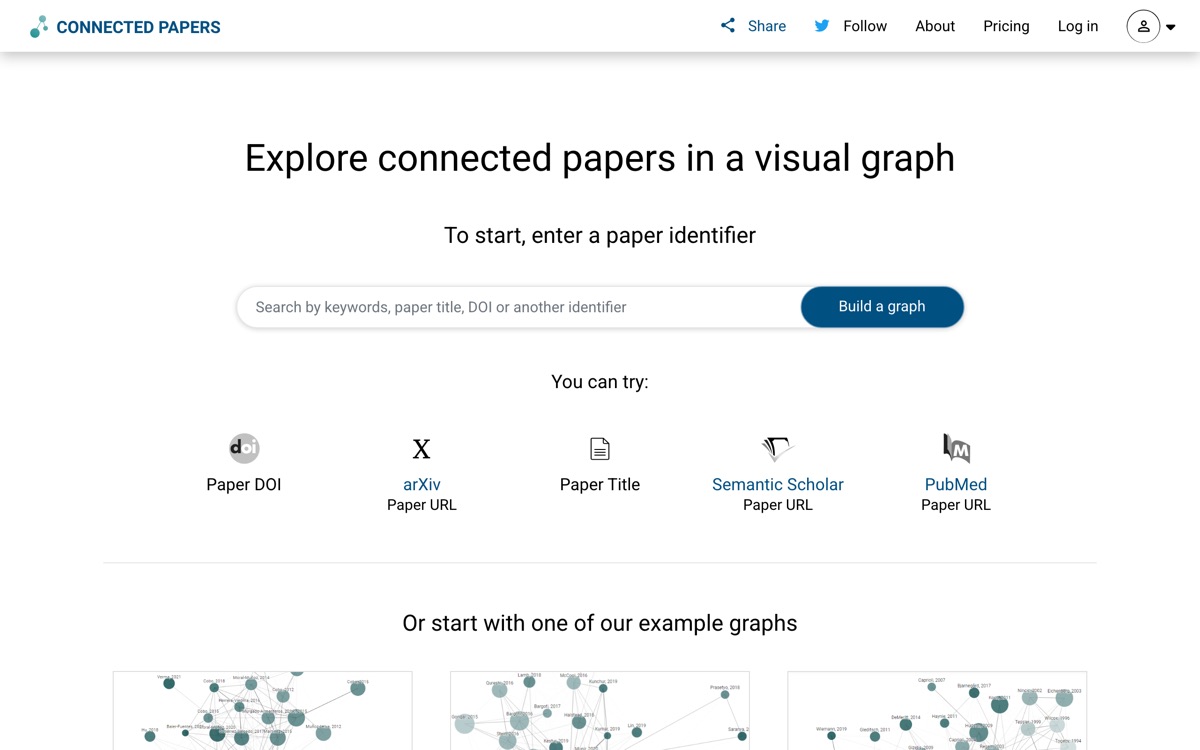
Connected Papers does one thing, and does it with unusual clarity. Give it a single seed paper and it builds a graph of the works most similar to it, positioning nodes by similarity and sizing them by citation count, so the field's landmarks and clusters become visible in seconds. The key design decision is that similarity is computed from co-citation and bibliographic coupling rather than direct citation — meaning two papers can sit adjacent on the graph without ever citing each other, which is exactly how you find the parallel literature you'd otherwise never encounter. Prior Works and Derivative Works views separate the foundations of a field from what came after it. It is the best tool here for the first hour on a new topic. It is not a literature review workflow: there are no collections to build up, no note-taking, no synthesis, and the graph is a static snapshot from your seed rather than something that evolves as you read. Quality collapses if your seed paper is poorly chosen or obscure. The free tier caps you at five graphs a month; paid academic access is inexpensive but the cap arrives sooner than you expect.
Features
Pros & cons
Pros
- Fastest way to get oriented in an unfamiliar research area
- Similarity-based layout surfaces parallel work that citation-following misses
- Clean, immediately legible visualisation with no learning curve
- Paid academic tiers are cheap by the standards of this category
Cons
- Free tier is capped at five graphs a month — restrictive in practice
- No collections, notes or synthesis — it's a one-shot view, not a workflow
- Graph quality depends entirely on a well-chosen seed paper
- Weak on very new or niche topics with sparse citation data
Who Connected Papers is for
Connected Papers is built for people working with research tools. Its free plan makes it easy to evaluate before paying, which suits both individuals and growing teams. Users most often highlight fastest way to get oriented in an unfamiliar research area.
How Connected Papers compares in AI Research Tools
Within research tools, the closest alternatives to Connected Papers are ResearchRabbit, Consensus, Scite — it is worth comparing them side by side on price and the specific features you need before deciding.
Connected Papers pricing
Connected Papers offers a free plan with paid upgrades. You can start for free and pay only when you need higher limits, advanced features or team seats. See the full Connected Papers pricing breakdown →
Connected Papers FAQ
Is Connected Papers worth it?
Connected Papers is most often praised for fastest way to get oriented in an unfamiliar research area. The main trade-off is that free tier is capped at five graphs a month — restrictive in practice. For most research tools needs it is a credible choice — trial it against one or two alternatives before you commit. ToolsPantry does not yet carry user reviews for this tool.
Is Connected Papers free?
Connected Papers offers a free plan with paid upgrades. You can start for free and pay only when you need higher limits, advanced features or team seats.
What are the downsides of Connected Papers?
The most commonly noted drawbacks are: Free tier is capped at five graphs a month — restrictive in practice; No collections, notes or synthesis — it's a one-shot view, not a workflow; Graph quality depends entirely on a well-chosen seed paper; Weak on very new or niche topics with sparse citation data. None are dealbreakers for everyone, but weigh them against your specific workflow.
What are the best alternatives to Connected Papers?
Strong alternatives in research tools include ResearchRabbit, Consensus, Scite, Elicit. See the full ranked list on the Connected Papers alternatives page.
The verdict
Connected Papers is a research tools option, best known for fastest way to get oriented in an unfamiliar research area. The main trade-off is that free tier is capped at five graphs a month — restrictive in practice. Start on the free plan and compare it against the alternatives below before committing.
Embed a badge
Show visitors Connected Papers is on ToolsPantry. Paste this into your site — it links back here. About badges →
<a href="https://toolspantry.com/tools/connected-papers" target="_blank" rel="noopener">
  <img src="https://toolspantry.com/tools/connected-papers/badge" alt="Connected Papers on ToolsPantry" width="252" height="60" />
</a>