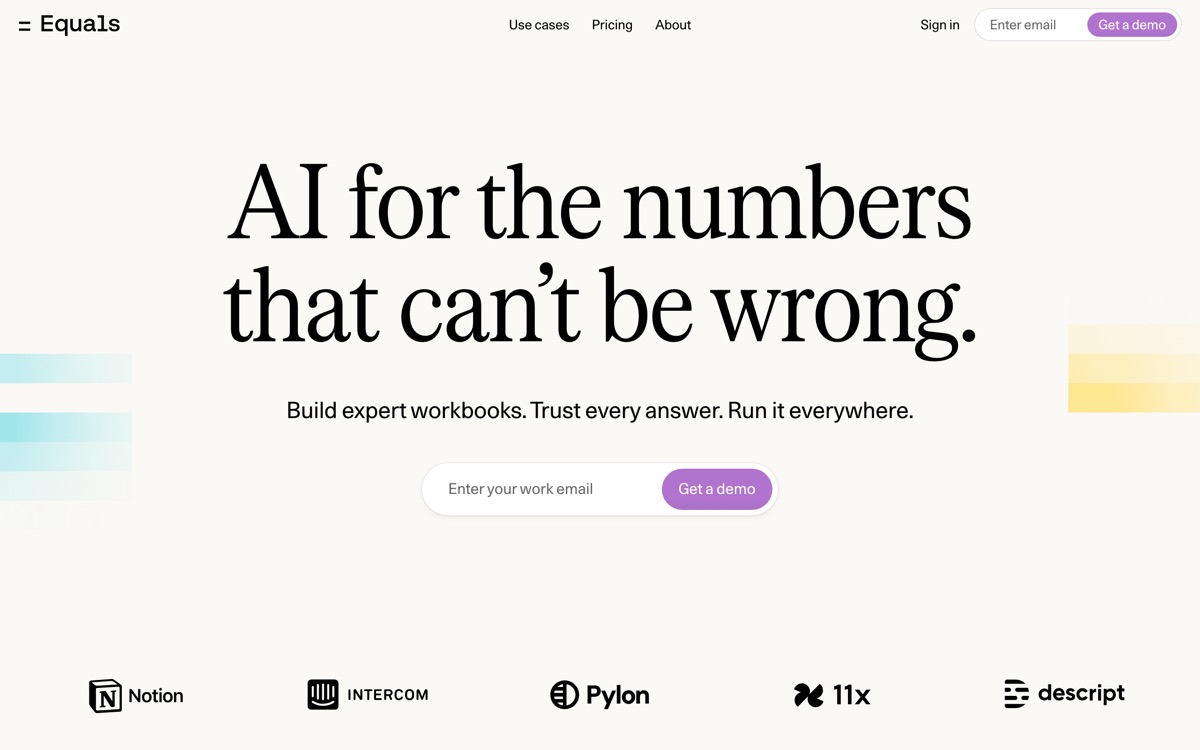
A spreadsheet-shaped BI layer for revenue teams, with a managed warehouse behind it.
Pricing
Verified 14 Jul 2026· sourceOverview
Equals is aimed at a specific reader: the RevOps analyst or founder who lives in a spreadsheet, needs ARR, pipeline and retention numbers that everyone agrees on, and has no data engineer to build the pipeline. It syncs your go-to-market tools into a managed warehouse, gives you a spreadsheet calculation layer on top, and turns the results into dashboards you can push to Slack, embed elsewhere, or interrogate with AI follow-up questions that resolve against the same underlying logic rather than inventing their own. That consistency is the actual product. It is also, by any reasonable measure, expensive: published plans start in the tens of thousands of dollars a year, which puts it firmly out of reach for startups counting seats. If you already run dbt and a BI tool, you are paying to replace something you have. And a managed warehouse you did not build is a managed warehouse you cannot easily leave.
Features
Pros & cons
Pros
- Removes the need for a data engineer to get trustworthy revenue metrics
- A single definition of each metric, so the same question gets the same answer
- Spreadsheet interface means analysts do not have to learn a new modelling language
Cons
- Pricing starts in the tens of thousands per year — small teams need not apply
- Strongly opinionated around GTM metrics; a poor fit for other analytics
- The managed warehouse creates real lock-in
- Redundant if you already have a working dbt and BI stack
Who Equals is for
Equals is built for people working with spreadsheet tools. Because it is paid-only, it suits teams ready to commit to a tool rather than experiment for free. Users most often highlight removes the need for a data engineer to get trustworthy revenue metrics.
How Equals compares in AI Spreadsheet Tools
Within spreadsheet tools, the closest alternatives to Equals are Rows, Numerous.ai — it is worth comparing them side by side on price and the specific features you need before deciding.
Equals pricing
Equals is a paid tool — there is no permanent free plan, though a free trial or demo may be available. See the full Equals pricing breakdown →
Equals FAQ
Is Equals worth it?
Equals is most often praised for removes the need for a data engineer to get trustworthy revenue metrics. The main trade-off is that pricing starts in the tens of thousands per year — small teams need not apply. For most spreadsheet tools needs it is a credible choice — trial it against one or two alternatives before you commit. ToolsPantry does not yet carry user reviews for this tool.
Is Equals free?
Equals is a paid tool — there is no permanent free plan, though a free trial or demo may be available.
What are the downsides of Equals?
The most commonly noted drawbacks are: Pricing starts in the tens of thousands per year — small teams need not apply; Strongly opinionated around GTM metrics; a poor fit for other analytics; The managed warehouse creates real lock-in; Redundant if you already have a working dbt and BI stack. None are dealbreakers for everyone, but weigh them against your specific workflow.
What are the best alternatives to Equals?
Strong alternatives in spreadsheet tools include Rows, Numerous.ai. See the full ranked list on the Equals alternatives page.
The verdict
Equals is a spreadsheet tools option, best known for removes the need for a data engineer to get trustworthy revenue metrics. The main trade-off is that pricing starts in the tens of thousands per year — small teams need not apply. Try the demo or trial first and compare it against the alternatives below before committing.
Embed a badge
Show visitors Equals is on ToolsPantry. Paste this into your site — it links back here. About badges →
<a href="https://toolspantry.com/tools/equals" target="_blank" rel="noopener">
  <img src="https://toolspantry.com/tools/equals/badge" alt="Equals on ToolsPantry" width="252" height="60" />
</a>