Microsoft's influential multi-agent research framework — now formally in maintenance mode.
Overview
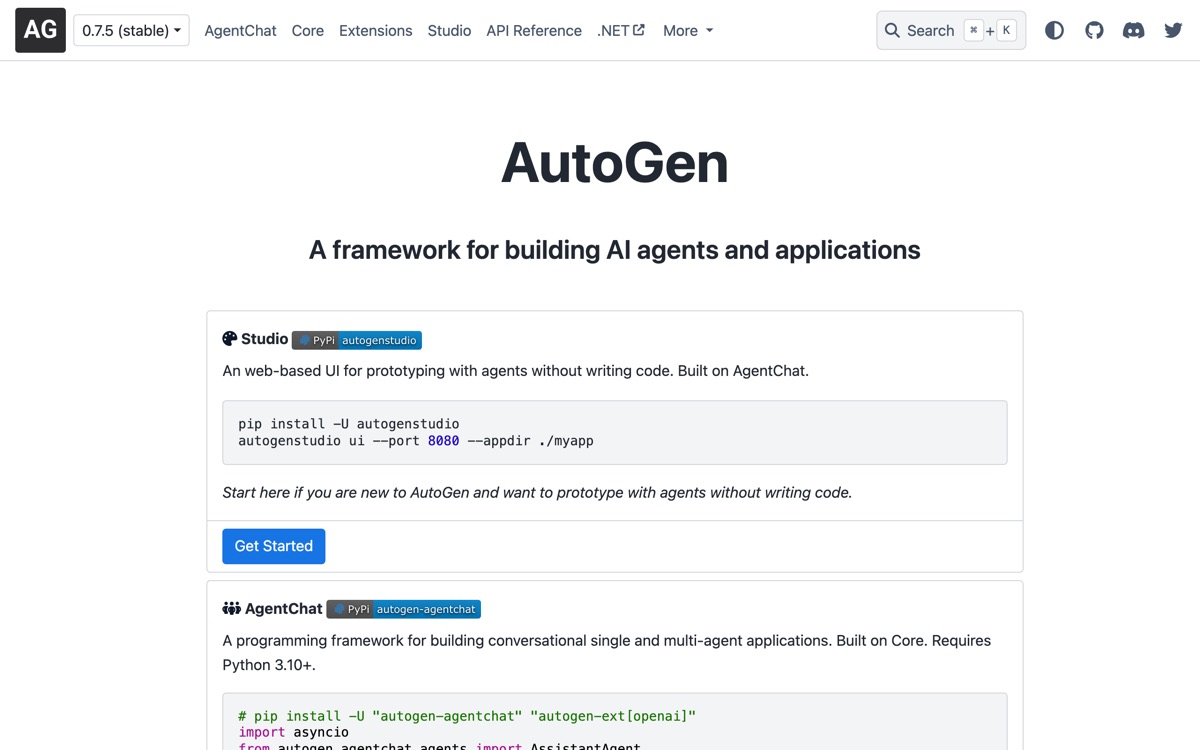
AutoGen is the open-source framework from Microsoft Research that popularised conversational multi-agent systems: agents that talk to each other, critique output, execute code and iterate towards a result. It was genuinely influential, and its conversable-agent pattern shaped much of what followed. The critical thing a prospective user needs to know in 2026 is a governance fact, not a technical one. Microsoft has folded AutoGen and Semantic Kernel into a single successor, the Microsoft Agent Framework, and placed both original projects into maintenance mode — bug fixes and security patches, no new features, with new development going to the successor SDK. That reframes the decision entirely. AutoGen remains a solid tool for research, experimentation and understanding multi-agent patterns, and existing deployments will keep working. But starting a new production system on a framework its own maintainers have declared feature-frozen is a choice you should make deliberately, if at all. For new .NET or Python builds inside the Microsoft ecosystem, the successor framework is the intended path and Microsoft publishes migration guidance.
Features
Pros & cons
Pros
- Free and open source with no licensing cost
- Excellent for learning and researching multi-agent patterns
- Backed by serious research work, with a clear published migration path forward
Cons
- Officially in maintenance mode — no new features, only fixes and security patches
- Microsoft directs new projects to the successor Agent Framework instead
- Agent-to-agent conversation loops can be slow and expensive in tokens
- Steeper learning curve than role-based alternatives, with sparse production guidance
Who AutoGen is for
AutoGen is built for people working with agents. Being free, it is an easy first choice when you want to get going without a budget. Users most often highlight free and open source with no licensing cost.
How AutoGen compares in AI Agents
Within agents, the closest alternatives to AutoGen are Devin, Browser Use, LangChain — it is worth comparing them side by side on price and the specific features you need before deciding.
AutoGen pricing
AutoGen is free to use — there is no paid tier required for its core features. See the full AutoGen pricing breakdown →
AutoGen FAQ
Is AutoGen worth it?
AutoGen is most often praised for free and open source with no licensing cost. The main trade-off is that officially in maintenance mode — no new features, only fixes and security patches. For most agents needs it is a credible choice — trial it against one or two alternatives before you commit. ToolsPantry does not yet carry user reviews for this tool.
Is AutoGen free?
AutoGen is free to use — there is no paid tier required for its core features.
What are the downsides of AutoGen?
The most commonly noted drawbacks are: Officially in maintenance mode — no new features, only fixes and security patches; Microsoft directs new projects to the successor Agent Framework instead; Agent-to-agent conversation loops can be slow and expensive in tokens; Steeper learning curve than role-based alternatives, with sparse production guidance. None are dealbreakers for everyone, but weigh them against your specific workflow.
What are the best alternatives to AutoGen?
Strong alternatives in agents include Devin, Browser Use, LangChain, Lindy. See the full ranked list on the AutoGen alternatives page.
The verdict
AutoGen is a agents option, best known for free and open source with no licensing cost. The main trade-off is that officially in maintenance mode — no new features, only fixes and security patches. Start on the free plan and compare it against the alternatives below before committing.
Embed a badge
Show visitors AutoGen is on ToolsPantry. Paste this into your site — it links back here. About badges →
<a href="https://toolspantry.com/tools/autogen" target="_blank" rel="noopener">
  <img src="https://toolspantry.com/tools/autogen/badge" alt="AutoGen on ToolsPantry" width="252" height="60" />
</a>